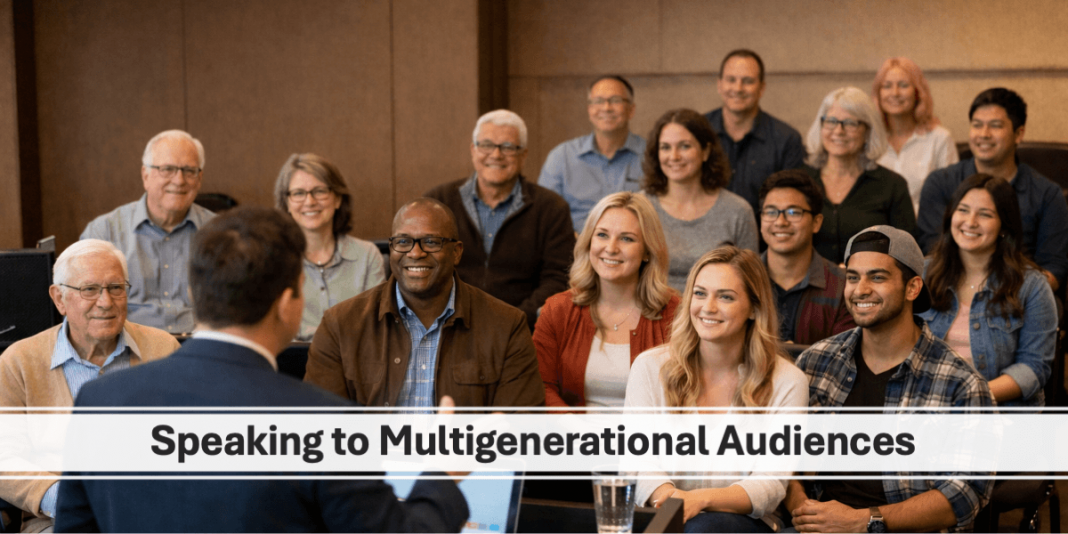
Walk into any conference hall, training room, town hall, or webinar today and you’ll notice something powerful – and challenging. The audience in front of you does not belong to a single age group. Instead, it represents a blend of generations, each shaped by different technologies, work cultures, values, and communication norms.
This is the modern speaking landscape. And it demands a new level of awareness.
Speaking to multigenerational audiences is no longer about “dumbing things down” or “keeping things trendy.” It’s about connection. When speakers fail to recognize generational diversity, engagement drops. When they succeed, the room feels unified – even energized.
This article explores how to speak to multigenerational audiences with clarity, respect, and impact – without losing your voice or your message.
1. Introduction: The Modern Speaking Landscape
Five Generations, One Room
For the first time in history, five generations may be present in the same audience:
- Silent Generation (1928–1945)
- Baby Boomers (1946–1964)
- Generation X (1965–1980)
- Millennials (1981–1996)
- Generation Z (1997–2012)
Each group has lived through different economic cycles, leadership styles, technological shifts, and cultural norms. Naturally, they listen differently, engage differently, and respond differently.
The Challenge of One-Size-Fits-All
A presentation style that energizes Gen Z may feel rushed to a Boomer. A detailed, formal talk that appeals to senior professionals may feel distant to younger listeners. When speakers assume one approach works for everyone, misunderstanding and disengagement follow.
The Real Goal
The goal is not to speak to generations.
The goal is to connect with humans – across age.
Great speakers move from broadcasting information to building shared meaning.
2. Understanding the Generational Profiles
(Patterns, Not Stereotypes)
Understanding generational tendencies helps speakers make better choices. These are patterns, not labels.
Silent Generation (1928–1945)
- Value tradition, formality, and professional hierarchy
- Appreciate respectful tone and structured delivery
- Respond to experience-backed insights
Baby Boomers (1946–1964)
- Prefer face-to-face or voice-based communication
- Value work ethic, context, and the “big picture”
- Appreciate well-earned credibility
Generation X (1965–1980)
- Pragmatic, independent, and skeptical of hype
- Value efficiency, clarity, and results
- Appreciate honesty and autonomy
Millennials (1981–1996)
- Value purpose, collaboration, and meaning
- Want to understand why something matters
- Respond well to stories and real-world impact
Generation Z (1997–2012)
- Digital natives with strong visual instincts
- Value authenticity, speed, and relevance
- Expect concise, engaging communication
The takeaway: Every generation wants clarity, respect, and value – just expressed differently.
3. Pre-Speech Preparation: Audience Analysis
Great multigenerational speaking begins before you step on stage.
Demographic Mapping
Research your audience:
- Industry
- Role level
- Likely age distribution
You don’t need exact numbers – just a realistic sense of the mix.
Contextual Relevance
Avoid examples that live in only one era.
- Only 80s pop culture → alienates younger listeners
- Only TikTok trends → loses older audiences
Instead, balance references or choose timeless examples.
Identifying Shared Values
Across generations, certain values resonate universally:
- Respect
- Growth
- Security
- Belonging
- Purpose
Anchor your message in these truths.
Strategy 1: Content and Language Choices
Avoid Slang and Jargon
- Corporate buzzwords confuse and irritate Gen Z
- Forced “cool language” feels inauthentic to older audiences
Plain, human language builds trust across ages.
Use Neutral Analogies
Choose metaphors everyone understands:
- Sports
- Nature
- Everyday human experiences
Avoid references that require cultural decoding.
Define Acronyms
Never assume everyone knows the language.
Explaining terms doesn’t slow you down – it brings people with you.
Strategy 2: Delivery Styles and Technology
The Multi-Channel Approach
Strong multigenerational speakers blend:
- Stories (Boomers, Millennials)
- Data and logic (Gen X)
- Visual impact (Gen Z)
This mix keeps the message layered and engaging.
Interactive Elements
Offer multiple ways to engage:
- Analog: show of hands, verbal responses
- Digital: QR codes, live polls, chat reactions
Participation should be invited, not forced.
Pacing and Structure
- Break content into clear, “snackable” sections
- Offer optional deep-dive handouts or resources
This respects both short and long attention styles.
Strategy 3: Visual Aids and Accessibility
Design for All
- Large, readable fonts
- High color contrast
- Clean layouts
Good design is not aesthetic – it’s inclusive.
Visual Representation
Use imagery that reflects multiple age groups.
People connect when they see themselves represented.
Subtitles and Transcripts
Captions, summaries, and transcripts help:
- Those with hearing challenges
- Non-native speakers
- Visual learners
Accessibility increases engagement for everyone.
4. Overcoming Generational Friction
Avoid Stereotypes
Jokes about “lazy youngsters” or “tech-illiterate seniors” instantly divide the room.
Build Bridges
Highlight how generations learn from each other:
- Experience and wisdom
- Innovation and agility
Lead with Empathy
Each generation has faced unique pressures:
- Economic uncertainty
- Digital disruption
- Changing career models
Acknowledgment builds trust.
5. Managing the Q&A Session Across Generations
Different Questioning Styles
- Some ask direct, structured questions
- Others speak conversationally or emotionally
Both deserve equal respect.
Validation Matters
Acknowledge every question thoughtfully – without talking down or brushing off concerns.
Moderate with Balance
Ensure no single group dominates the conversation.
Speaker Checklist: Multigenerational Readiness
Before your next presentation, ask yourself:
- Have I researched my audience mix?
- Are my examples era-neutral or balanced?
- Is my language clear and inclusive?
- Do my visuals support all age groups?
- Am I offering multiple ways to engage?
- Am I prepared to handle diverse question styles?
If you answer “yes” to most of these – you’re ready.
Common Do’s and Don’ts Summary
Do:
- Speak clearly and humanly
- Balance stories, data, and visuals
- Design for accessibility
- Respect different engagement styles
Don’t:
- Assume one style fits all
- Overuse slang or jargon
- Stereotype generations
- Confuse silence with disengagement
Conclusion: One Message, Many Listeners
Speaking to multigenerational audiences is not about pleasing everyone – it’s about respecting everyone.
When speakers lead with clarity, empathy, and intention, age differences fade. What remains is connection.
The challenge for your next presentation:
Find one universal hook – a shared human truth – that every generation in the room can recognize.
Do that, and your message won’t just be heard.
It will be remembered.